
Books
Perspectives on project, program and portfolio management, international management, and the nature of human action.
01 / Project management
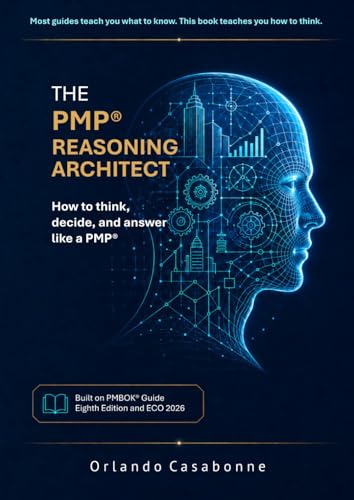
The PMP® Reasoning Architect: How to think, decide, and answer like a PMP®
Stop memorizing.
Start reasoning.
Most PMP® prep books focus on recall. This book develops the professional judgment the PMP® exam actually tests, helping you interpret situations, distinguish symptoms from causes, and make sound decisions under pressure.
Analyze scenarios across People, Process, and Business Environment.
Understand why the best answer is right, and why the others are weaker.
Navigate predictive, agile, and hybrid contexts with confidence.
Recognize exam traps and flawed managerial instincts.
Build reasoning aligned with ECO 2026 and the PMBOK® Guide Eighth Edition.
Pass the exam with the judgment of a professional.
02 / Project, program and portfolio management
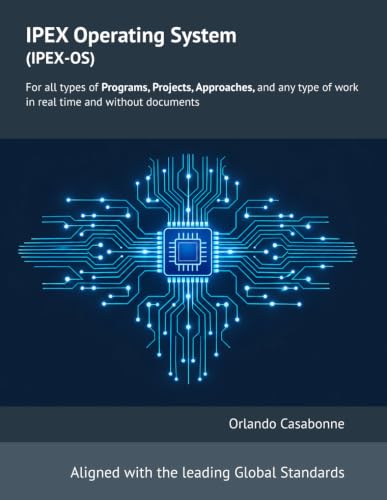
The IPEX Operating System: For All Types of Programs, Projects, Approaches, and Any Type of Work in Real Time and Without Documents
The IPEX Operating System (IPEX-OS) is a complete operating system to manage any type of work. It provides a universal grammar that transforms any intention into a traceable, measurable, and verifiable realization of results. Built on five recursive process groups (Initializing, Planning, Executing, Controlling, and Closing), it replaces document-based control with live fulfillment through the Performance Reference and the Status Measurement Framework. It helps manage and govern programs, projects, phases, work packages, and all forms of purposeful work under one coherent logic that operates in real time and without reliance on documents or templates.
IPEX-OS serves three audiences with a single purpose. Practitioners gain operational clarity, the ability to manage work without confusion about how work units connect to higher structures. Leaders gain assurance, one grammar that unifies portfolio intent with execution reality and guarantees genuine closure. System architects and IT implementers gain integration, a license-managed design surface through which governance can be embedded directly into digital tools and enterprise systems.
Aligned with ISO standards and validated through comparative analysis with PMI, Axelos, and SAFe, IPEX-OS defines a condition-based operating system that unifies predictive, adaptive, and hybrid methods under one coherent architecture. The purpose throughout is simple but demanding: to give every actor a recursive foundation of management that secures fulfillment and restores trust in results.
One system. Three roles. One logic.

03 / Portfolio governance
An Execution-Integrated Portfolio Governance Architecture under ISO 21504 and ISO 21505
From Framework to Structure – Embedding Governance Where It Matters
An Execution-Integrated Portfolio Governance Architecture under ISO 21504 and ISO 21505 presents a bold and necessary departure from conventional governance frameworks. While PMI, AXELOS, and SAFe treat governance as an external supervisory layer, this book argues that true governance must be structurally embedded in execution itself.
Grounded in ISO 21504, ISO 21505, ISO 42010, and ISO 42020, this work defines a comprehensive architecture, not a method, framework, or guide, designed to embed decision rights, authority paths, escalation triggers, and strategic oversight directly into the execution environment. The result is the IPEx-PfGS Architecture: a structural design that transforms governance from a passive oversight function into an active, enforceable system of control.
This book is for executives, portfolio managers, architects, and consultants who demand more than checklists and charters, who seek real strategic alignment, traceability, and operational legitimacy. It offers the architectural foundation behind the proprietary IPEx Portfolio Governance System (IPEx-PfGS), detailing its components while preserving the system’s operational confidentiality.
Governance is not what you declare. It’s what you structurally design.
04 / Sponsorship
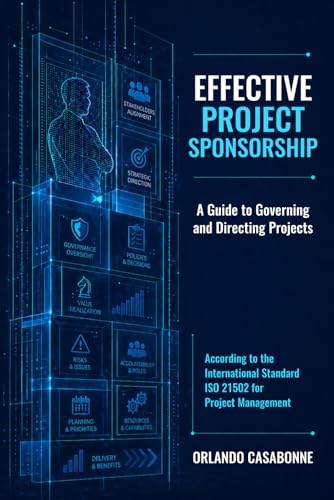
Effective Project Sponsorship: A Quick but Comprehensive Guide to Governing and Directing a Project according to the international norm ISO 21502 for Project Management
This guide emphasizes the pivotal role that project sponsors play in the success or failure of projects. At the same time, it contributes to bridging the gap between the limited availability of specific guidance for this crucial role and the abundance of literature available for the project manager role.
In an ideal world, project sponsors play a key role in aligning projects with organizational goals and achieving benefits. They govern and direct projects through sponsor-specific activities in project selection, initialization, planning, execution, control, and closure. Project sponsors provide strategic direction, support, and resources, applying an integrated view of portfolio, program, and project management to ensure alignment between high-level strategic vision and the implementation of projects and programs.
However, in the real world, many projects lack appropriate sponsorship. It is not uncommon for the sponsor’s identity to be unknown or for the sponsor’s specific responsibilities to be unclear.
This guide aims to address these gaps and is targeted towards both new project sponsors seeking guidance, experienced sponsors looking to validate their practices, as well as project managers who can benefit from the insights provided in this guide when developing project management processes that incorporate the activities to be performed by the sponsor. It can also be useful for project management office (PMO) managers seeking to enhance their support services for project sponsors.
05 / Project management
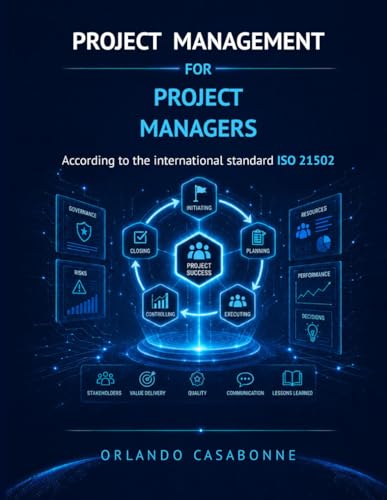
Project Management for Project Managers: According to the international standard ISO 21502
Irrespective of the prevailing management philosophy and the chosen delivery approach, any type of work necessitates the management activities of initialization, planning, execution, control, and closure. By utilizing the international standard ISO 21502 as a framework, it ensures the effective and consistent implementation of these essential project management activities, leveraging a globally recognized standard.
Throughout the book, you’ll find an ongoing case study that serves as a practical illustration of the concepts discussed. This approach enhances your understanding of the subject matter and its real-world applications.
Project management is the vehicle of change, and this book is your toolkit for mastering it. By equipping you with global best practices, it enables you to navigate projects with precision and excellence.
06 / International management
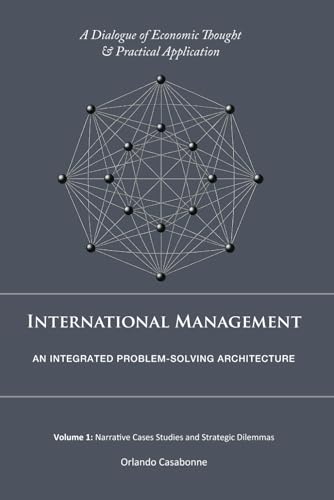
International Management: An Integrated Problem-Solving Architecture, Volume 1: Narrative Case Studies and Strategic Dilemmas
Global markets are dynamic, interconnected, and shaped by political tensions. In this environment, technological superiority or a compelling product is no longer enough. The real challenge lies in navigating the human, legal, and contextual complexity of international expansion.
Volume 1 makes global reality visible through narrative case studies. Theory is not presented in isolation, but emerges from the situations themselves and is clarified through the analysis that follows each case. From the Vienna Debate at Café Central to boardroom decisions in Dubai, compliance crises in Kenya, and negotiation breakdowns in Kinshasa, this volume reveals international management as a coherent system.
Sixteen case studies cover the core fields of international management. Together with Volume 2, which reconstructs the same cases through systematic strategic analysis and counterfactual exploration, this volume forms an integrated learning framework that connects experience, analysis, and strategic judgment.
07 / International management
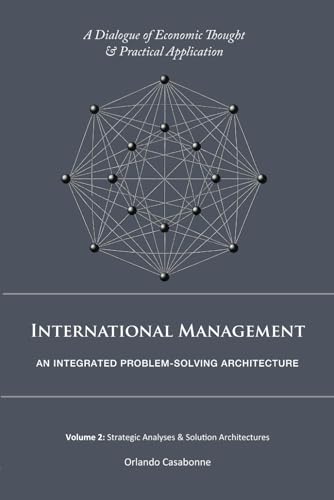
International Management: An Integrated Problem-Solving Architecture, Volume 2: Strategic Analyses & Solution Architectures
Global markets are dynamic, interconnected, and shaped by political tensions. In this environment, technological superiority or a compelling product is no longer enough. The real challenge lies in navigating the human, legal, and contextual complexity of international expansion.
Volume 2 makes strategic analysis visible through the reconstruction of complex international decision situations. Reconstructing the sixteen case studies from Volume 1, it focuses not on ready-made answers, but on the logic of reasoned decision-making under conditions of uncertainty and goal conflict. Alternative strategies, weighted comparisons, and counterfactual scenarios make each case a transferable analytical exercise.
Each chapter draws out the strategic lessons embedded in the full analysis. Together with Volume 1, which makes global reality visible through narrative case studies, this volume forms an integrated learning framework that connects experience, analysis, and strategic judgment.
08 / Human action
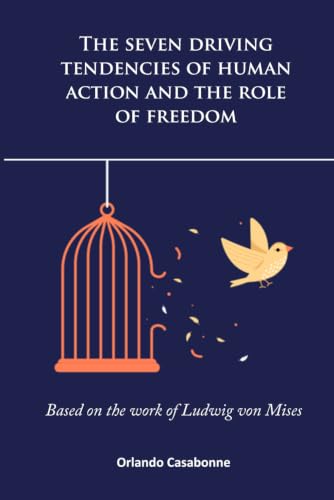
The Seven Driving Tendencies of Human Action and the Role of Freedom: Based on the Work of Ludwig von Mises
This book defends a revolutionary thesis: freedom is not merely a fundamental right but an existential condition inherent to the essence of the human being. Drawing on Ludwig von Mises’s seminal work, Human Action, the author argues that human actions are driven by seven essential tendencies that can only be fully realized in an environment of freedom. Restricting this freedom, therefore, amounts to a direct attack on the very essence of humanity.
Freedom is defined as the condition in which a human being can act according to their own will, without external coercion, except when such coercion is necessary to protect the life, property, and freedom of other human beings.
Contents of the Book:
Part One: A comprehensive and faithful summary of Human Action, following Mises’s original structure. This section delves into the principles of praxeology, the necessity of economic calculation, the dynamics of free markets, the limitations of cooperation without exchange, the effects of state interventions, and the defense of economic rationality as a cornerstone of social progress.
Part Two: An original analysis of the seven tendencies driving human action:
Intentionality: Human beings act with a specific purpose, seeking to satisfy their desires and achieve their goals.
Deliberate Choice: Human action involves choosing among various alternatives, given the constraints of resources and time.
Subjective Rationality: Human decisions are guided by each individual’s subjective perception of reality, shaped by their experiences and knowledge.
Temporal Preference: Humans tend to value present goods more highly than future goods.
Reduction of Uncertainty: Humans act in an environment of uncertainty, striving to find methods to reduce it and manage risks.
Maximization of Satisfaction under Constraints: Humans aim to maximize their personal well-being by selecting actions that provide the greatest possible marginal benefit, fully aware of opportunity costs.
Cooperation and Voluntary Exchange: Humans cooperate and exchange with others because they recognize that the division of labor and cooperation increase productivity and well-being, enabling them to achieve goals unattainable on their own.
Who This Book Is For: This book is essential for economists, philosophers, academics, students, and anyone interested in praxeological theory, Austrian economics, and the fundamental role of freedom in human action. It offers an original and profound perspective on how freedom enhances individual and social motivations, providing a rigorous analysis of human behavior in contexts of cooperation and conflict. The book highlights how freedom, understood as an essential condition of existence, serves as the indispensable foundation for the full exercise of human tendencies.
Book orders
Books for your team?
Bulk orders
Ask about a special offer
Planning to order multiple copies of any of these books for a team, organization, or training program? Contact the author directly to discuss quantities and request a special offer.
Address
Langemarckstrasse 11279100 Freiburg, Germany
Mobile
+49 (0)160 551 08 36